Loading...
Lest We Forget, part 7: The Street Memorials of the Abbey Parish
St Albans has something found nowhere else in Britain: a set of stone memorials built into the walls of ordinary streets around the Cathedral, each listing only the men who lived there. Local historians describe the collection as unique, and say there is nothing similar elsewhere in the country.
Part 7 of 13 of Lest We Forget, a history of remembrance in Harpenden and St Albans. Read the whole illustrated book.
St Albans has something found nowhere else in Britain: a set of stone memorials built into the walls of ordinary streets around the Cathedral, each listing only the men who lived there. Local historians describe the collection as unique, and say there is nothing similar elsewhere in the country.
Not street shrines
The plaques are often confused with the wartime "street shrines" that appeared across Britain from 1916. The two were different. Shrines were typically wooden and temporary, put up in 1916 to 1918, and listed the men from a street who were then serving, with a mark beside the name of anyone who had been killed. They were meant to support both the anxious and the bereaved.
The Abbey parish did have shrines. Eighteen were dedicated by clergy from St Albans Cathedral in 1916 and 1917, and a watercolour from about 1919 shows one on the Clock Tower. All were taken down after the war. The new stone memorials replaced them, and listed only the names of those who had died.
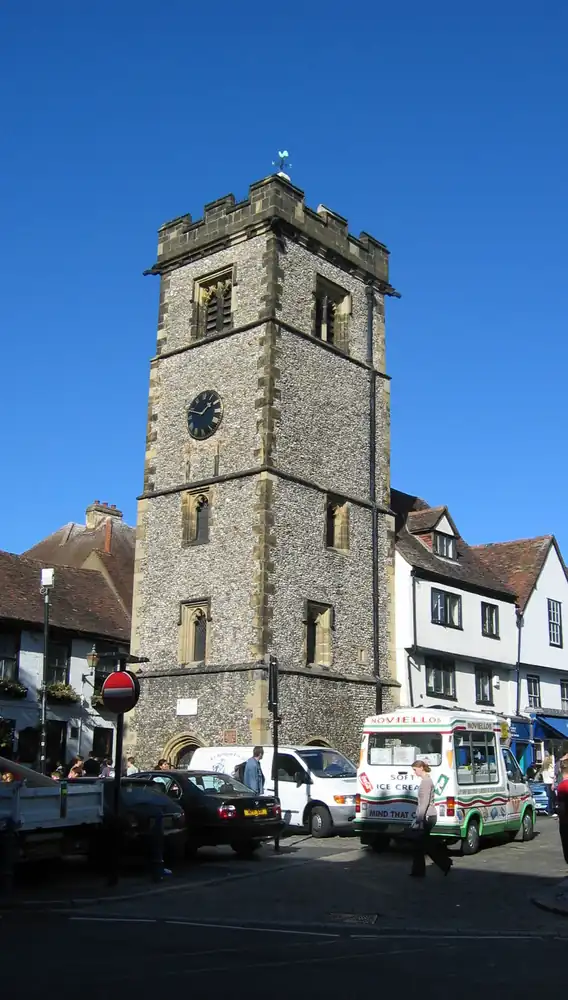
St Albans Clock Tower. A wartime street shrine was fixed to its wall, and one of the street memorials stands opposite, in the High Street.
Photo: Gary Houston, CC0.
Ten memorials, 1920 to 1921
The first was unveiled in Albert Street in April 1920. Canon George Glossop, who served the Abbey for 40 years, promoted the plan. The Bishop of St Albans, Dr Michael Furse, dedicated several. Each plaque is individual in design, and many carry the words "For Remembrance 1914-1918". Some include men from neighbouring streets, and over 100 names are recorded across the group.
- Albert Street — When: April 1920 · Notes: The first, on a house at 34 and 36 Albert Street
- Bardwell Road Pageant Road Sopwell Lane Holywell Hill Fishpool Street High Street Lower Dagnall Street Orchard Street — When: Summer 1920 Summer 1920 Summer 1920 October 1920 1921 1921 1921 Unclear · Notes: Dedicated by Bishop Furse At 11 Pageant Road, with nine names Dedicated by Bishop Furse Opposite the Clock Tower At number 35 Its origins are obscure
Five of the plaques, in Albert Street, Lower Dagnall Street, Pageant Road, Sopwell Lane and one other, were given Grade II listed status after an application by St Albans City and District Council. A book, The Street Memorials of St Albans Abbey Parish, records the men on all but one of them.
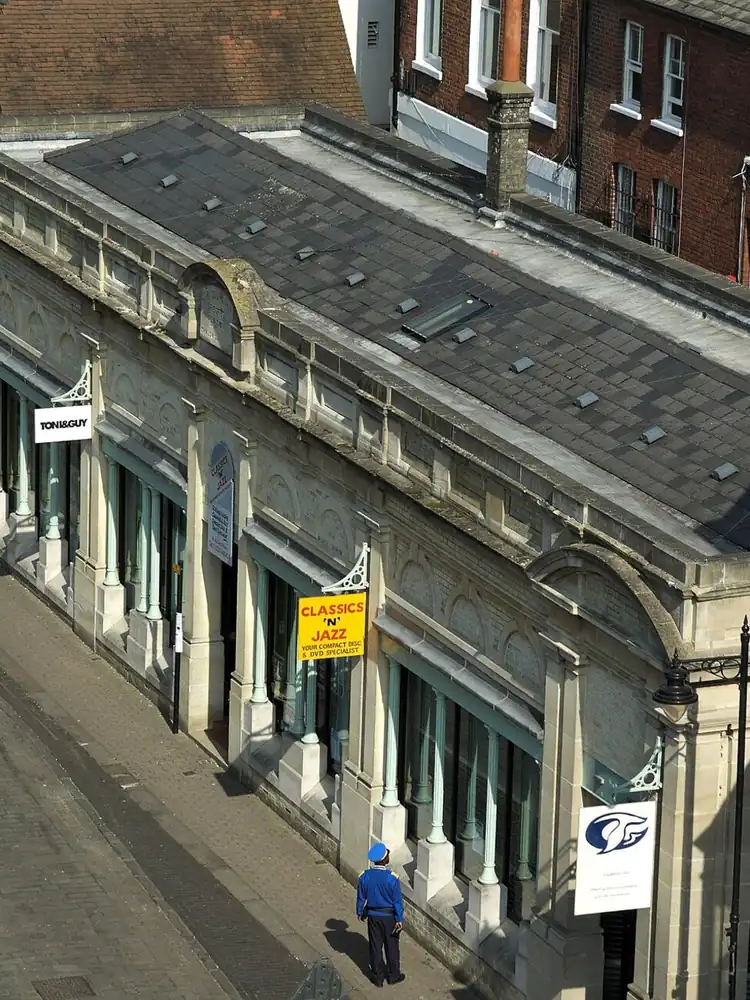
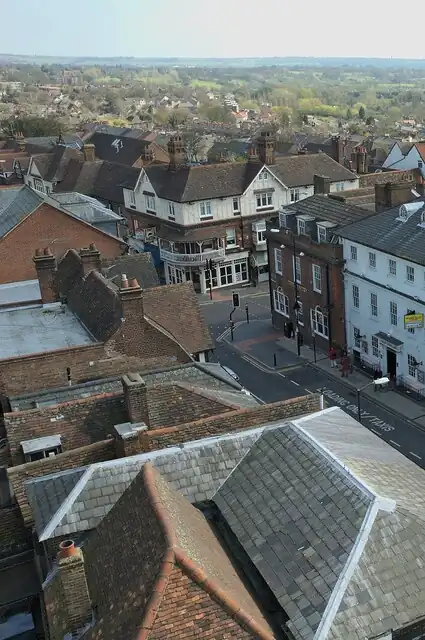
Illustrative: two views over the streets of St Albans city centre, seen from the Clock Tower. The street memorial at 11 Pageant Road lists nine names.
Photos: Gary Houston, CC0.
Small and personal
Some of these memorials are very small. A tablet at 10 St Peter's Street, in what is now a bank, records a single name. The Pageant Road plaque is one of ten mounted on houses in the Abbey parish and one of 40 war memorials in St Albans in total. Walking from one to the next gives a very different picture of the war than the single city cross does: a few names at a time, on the street where each man lived.
Kings Road: a memorial a century late
Some streets were left out. Kings Road lay just outside the Abbey parish, so its fallen were never given a plaque, even though the road suffered among the highest First World War casualties of any city-centre street.
In May 2023, residents corrected that. The idea came from resident Judy Sutton, co-author of an illustrated history of the road's fallen, and a residents' committee raised around £12,000 through a book, Kings Road: For King and Country, along with donations, street parties and raffles. The sculptor Renato Niemis designed a memorial called Last Post, built into the wall of 1 Kings Road. It names 15 soldiers whose civilian jobs included cowman, gamekeeper, postman, brass finisher and gas worker. It was unveiled on Saturday 13 May by Joan Stanley, the niece of one of the men.
The memorial is maintained by St Albans City and District Council. One of its creators said it was partly about finally bringing the men home from the war.
Keep reading
Previous: ← Building Memory: The Memorials of 1920 and 1921
Next: Private Edward Warner VC: The Straw Hat Maker from Cannon Street →
📖 Read the whole illustrated book. Turn the pages like a real book, or swipe on your phone.
All 13 parts
- Introduction: Why We Remember
- August 1914: Two Towns Go to War
- Harpenden in the Great War: Camp, Hospital and Home Front
- St Albans in the Great War: A Garrison Town
- The Fallen: The People Behind the Names
- Building Memory: The Memorials of 1920 and 1921
- The Street Memorials of the Abbey Parish (you are here)
- Private Edward Warner VC: The Straw Hat Maker from Cannon Street
- Between the Wars: Learning the Ritual
- 1939 to 1945: Harpenden at War
- 1939 to 1945: St Albans at War
- Adding the Second World War Names
- Remembrance Today: Services and Walks
From you, for your neighbours
Share your story
Have a story from your street, your family or your town? Write it up and share it with us, and we'll publish it for your neighbours. It's free, and you don't need to be a writer.
- Local history
- Family and street memories
- Places and walks
- People and profiles
- Food, drink and traditions
- Old photos and keepsakes
A good story usually has
- A clear title
- Your own words
- Which town
- Names and dates, if you have them
- Photos you own or can share